


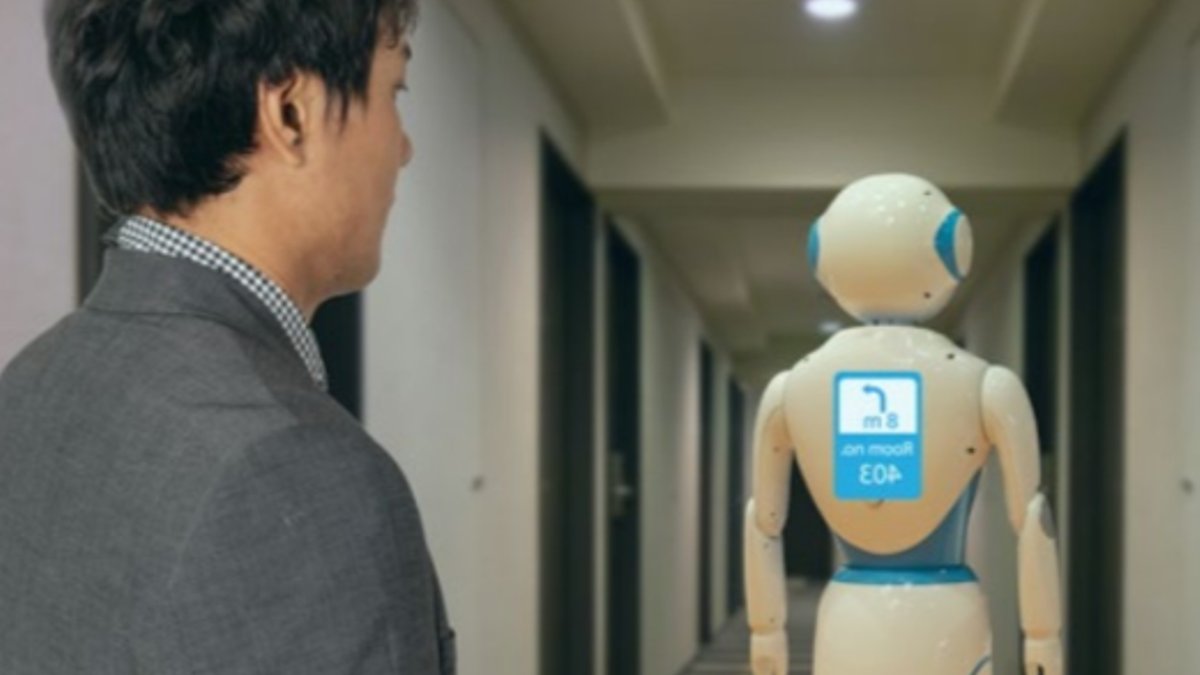
Service robots are moving from experimental showcases into everyday hotel kitchens and restaurant floors, where they assist staff with repetitive tasks and peak-time demand. While guest acceptance has been widely documented, a new investigation looks at the people who share the workspace with these machines.
Employees’ attitudes under the microscope
Researchers from Macao University of Tourism teamed with scholars in the United Kingdom and the United States to run two controlled experiments. One involved restaurant workers in China, the other hotel employees in the United Kingdom, providing a cross-cultural view of staff reactions.
The studies applied similarity-attraction theory and congruity theory to test whether a robot’s visual ethnicity and spoken accent shape expectations of interaction quality, perceived helpfulness, and willingness to recommend the technology to colleagues.
Across both samples, participants responded more favorably when a robot’s outward appearance reflected the ethnic traits commonly associated with their work environment. Workers who saw a robot that matched their cultural expectations were likelier to anticipate enjoyable exchanges and to view the robot as a supportive teammate.
Accent mattered in the Chinese setting. Robots that used a familiar local accent generated higher expectations of helpful behavior than those with foreign-language speech patterns.
Read Also: Spanish PM condemns pensioner eviction
Unlike many technology adoption studies that focus on functional performance, this research found that the emotional tone of the interaction—how pleasant it felt—was the strongest driver of positive word-of-mouth. Perceived helping ability mattered less, indicating that staff value the social dimension of working with robots as much as, if not more than, the practical output.
These results echo earlier findings on language-matching in customer-service bots, where alignment with local speech patterns boosted acceptance. The pattern suggests that cultural resonance, whether visual or auditory, can smooth the integration of automated helpers into human teams.
Implications for design and management
For developers, the message is clear: robot aesthetics and voice settings should be tailored to the cultural context of the intended deployment. A robot that looks and sounds familiar may reduce the uncertainty staff feel when first encountering the technology.
Hospitality managers are reminded that successful rollout goes beyond purchasing hardware. Training programs, clear communication about the robot’s role, and opportunities for staff to practice coordination can alleviate anxiety and support a sense of partnership.
The study’s authors highlight Macau’s multicultural tourism sector as a proving ground for such approaches. With a workforce drawn from many backgrounds and a visitor base that spans continents, the city offers a unique laboratory for testing culturally attuned service robots.
Read Also: Countries Fail to Meet UN 30×30 Biodiversity Target
The full paper, authored by Huijun Yang and colleagues, appears in The Service Industries Journal and details the experimental protocols, statistical analyses, and theoretical framework supporting these conclusions.
Operational benefits and employee concerns
Automation in hospitality offers tangible gains for frontline staff. Repetitive duties such as dish transport and luggage handling can be delegated to machines, freeing workers for guest-focused tasks. Studies note that such delegation improves overall operational speed during peak periods.
Employees also encounter uncertainty when robots enter the workplace. Some staff express worries about shifting role definitions and the need to learn new coordination methods. The research highlights that these concerns may stem from limited prior exposure to robotic assistants.
Beyond efficiency, robots provide supplemental support when human resources are stretched thin. By handling routine functions, they help maintain service standards even when staffing levels dip.
Future directions for smart hospitality
Overall, the evidence suggests that successful integration hinges on viewing robots as collaborative teammates rather than replacements. When staff perceive machines as reliable allies, the hospitality sector can advance its digital transformation while preserving the human-centred ethos of service.


