


Gold prices in India increased on Monday, with 24-carat gold rising ₹930 to ₹145,860 for 10 grams, according to retail data. The rise followed a pause in U.S.-Iran tensions and a small drop in oil prices. Investors turned their attention to the U.S. Federal Reserve’s upcoming monetary policy decision, expected later in the week.
At the Multi Commodity Exchange of India, gold traded 0.56% higher at ₹143,911, while U.S. spot gold held above $4,000 per ounce.
What is 9-carat gold?
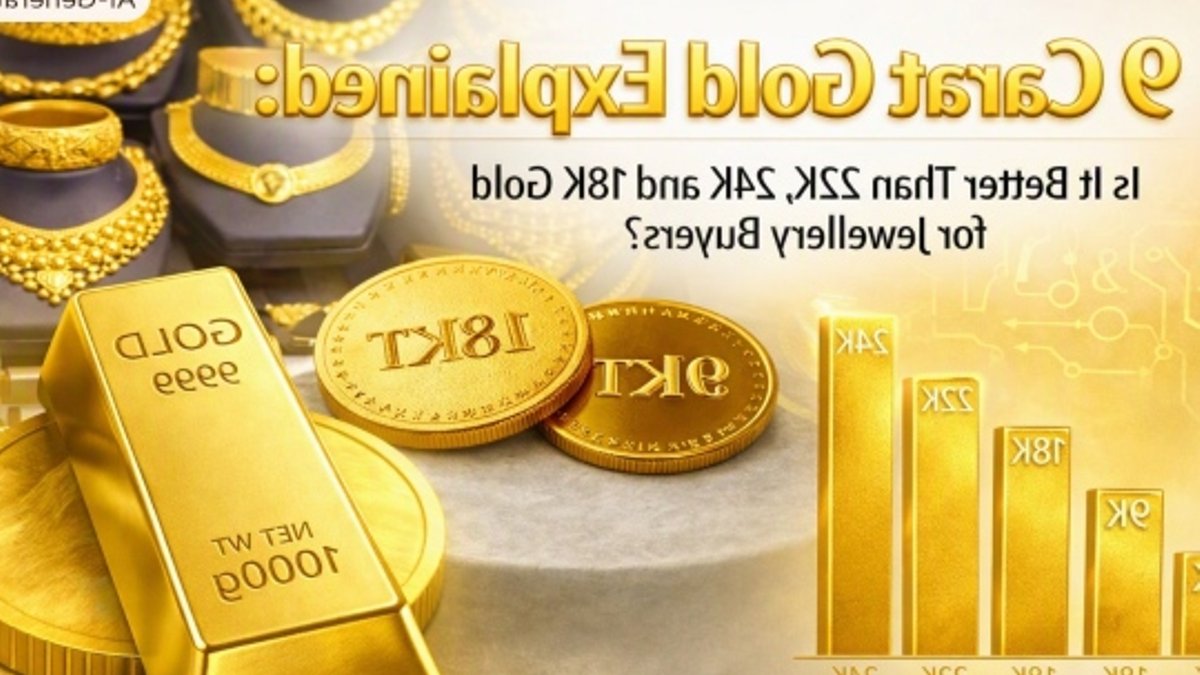
Nine-carat gold contains 37.5% pure gold and 62.5% other metals such as copper, silver, or zinc. The added alloys make it harder than higher-carat gold, which bends more easily. Its lower gold content also keeps costs down.
Related: Silver prices remain steady in India today
Major jewelers, including Mia by Tanishq and Palmonas, have launched 9-carat gold collections. Most pieces include a hallmark to verify authenticity. The metal has a softer yellow tone compared to 22K or 24K gold, which some buyers prefer for its subtle appearance.
For daily wear, it offers a practical option. It’s lighter, cheaper, and less prone to scratches than purer gold. However, its reduced gold content means it may not retain value as well over time.
How 9K compares to 22K and 24K gold
Twenty-four-carat gold is nearly 99% pure, making it the most valuable but also the softest. Because of its malleability, it’s rarely used in jewelry—most is reserved for coins and bars. Twenty-two-carat gold, with 91.6% purity, is a common choice for traditional Indian jewelry. The remaining 8.4% consists of alloys that add strength without dulling the metal’s shine.
Prices reflect these differences. Twenty-four-carat gold is the most expensive, followed by 22K and then 18K. Nine-carat gold costs the least, often priced at less than half the rate of 24K. The trade-off is between durability and purity—higher carats offer more gold, while lower carats focus on practical use.
Related: The Difference Between a Publicist and a Marketing Agency
Buyers typically choose based on purpose. Heavy, ornate jewelry like bridal sets usually uses 22K gold for its rich color and value. Nine-carat gold works better for lightweight, everyday items such as chains or studs.
The decision isn’t just about budget. Gold’s resale value depends on purity, so 22K or 24K jewelry often sells for more later. Nine-carat gold, while cheaper upfront, may lose value faster. Still, for those who value wearability over long-term worth, it remains an attractive choice.
Others opt for vermeil or gold-plated jewelry, though these don’t last as long as solid gold.
Is 9-carat gold the right choice?
The choice depends on what matters most to the buyer. If affordability and durability are priorities, 9-carat gold is a sensible option. It’s lighter, more resistant to wear, and far less expensive than higher-carat gold. For those viewing jewelry as an investment, 22K or 24K gold may be preferable despite the higher cost.
Related: Sun Allergy Affects Some People
Skin sensitivity is another consideration. Some people react to the alloys in lower-carat gold, experiencing irritation or discoloration. Higher-purity gold is less likely to cause such issues, though testing a small piece first can prevent problems.
Jewelers note that 9-carat gold’s lower gold content means it may not age as well as 22K or 24K. Over time, the alloys can tarnish or discolor, especially with exposure to chemicals or moisture. Proper care, like removing jewelry before swimming, can help, but it won’t last as long as purer gold.
For now, 9-carat gold fills a gap between luxury and practicality. It’s not the traditional choice for weddings or heirlooms, but it suits buyers who want gold without the premium.


