


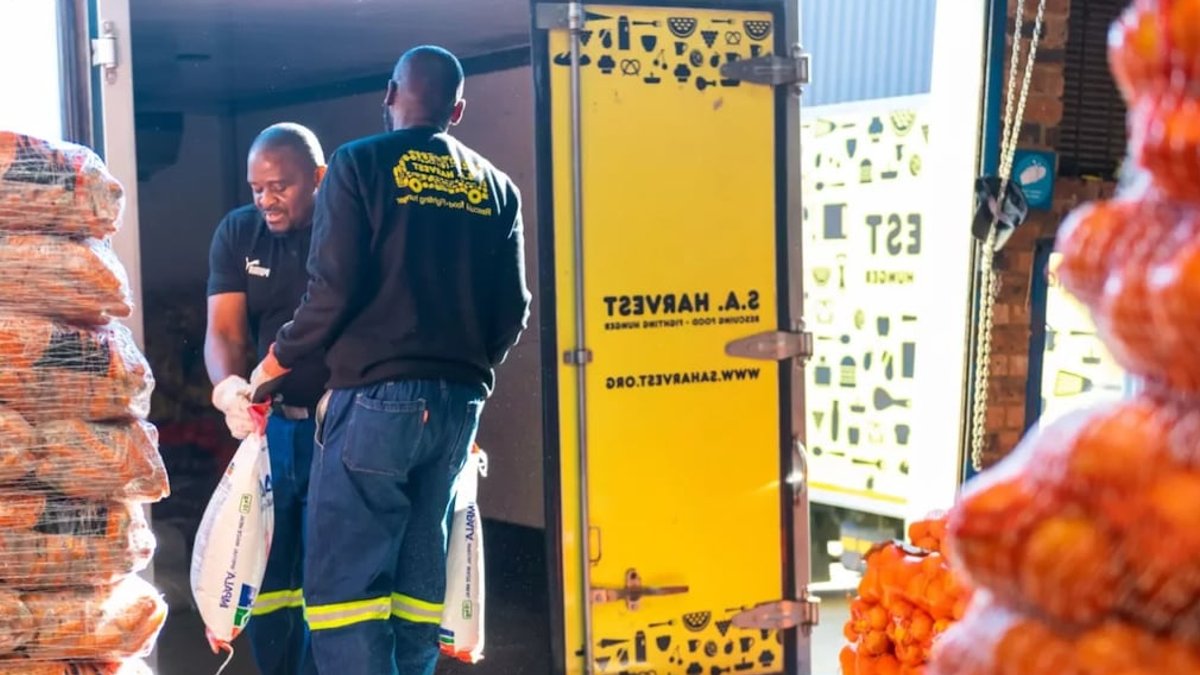
South Africa’s hunger crisis deepened in 2025, with over 9.4 million people facing food insecurity—the worst level since 2010—while food prices continued to outstrip household budgets despite inflation easing slightly. The South African Food Security Index 2026, commissioned by Shoprite Group, revealed that 14.7% of the population experienced hunger, as the overall food security score fell to 52.6 from 56.5 the prior year. The decline showed a fundamental mismatch: the country produces enough food, but most households cannot afford it.
The index evaluates food security through three dimensions: availability, access, and dietary variety. Although food inflation decelerated in 2026, registering 1.1% annual growth in food and nonalcoholic beverages by August, prices remained high, leaving many unable to purchase balanced meals. The Pietermaritzburg Economic Justice and Dignity Group calculated that a basic nutritional food basket cost R6,655.29 in 2026, a sum far beyond the reach of most families.
Gareth Haysom, a senior researcher at the University of Cape Town’s African Centre for Cities, explained that food insecurity encompasses more than hunger alone. A 2023 Human Sciences Research Council study showed only 36.5% of households were food secure, meaning 63.5% lacked reliable access to adequate nutrition. The root cause lies in stagnant incomes and a food system prioritizing production over affordability.
Mark Heywood of the Union Against Hunger identified the core issue: essential food items remain prohibitively expensive. Even as food inflation eased, prices did not drop proportionally, trapping households in a cycle of unaffordability. The “rocket and feather effect”, where price increases occur rapidly but declines are slow, worsened the problem. Heywood questioned whether reduced inflation had truly improved access, citing research from the Competition Commission and the Pietermaritzburg group that showed minimal progress for low-income families.
Household budgets crushed by rising costs beyond food
Rising costs beyond groceries further squeezed household budgets. By March 2026, housing and utilities accounted for 39% of headline inflation, double the 19% contributed by food. Higher transport, electricity, and fuel expenses left less disposable income for meals, pushing families toward cheaper, less nutritious staples like instant noodles or maize porridge.
The impact on children is particularly severe. Heywood referenced data indicating that 29% of children under five suffered from stunting, a condition tied to poor nutrition that impairs growth and cognitive development. Rural female-headed households faced the steepest increases in vulnerability, with 41.7% living below the food poverty line in 2025, up from 38.4% in 2023.
Shoprite Group acknowledged these challenges in its report. While the company capped its internal selling price inflation at 0.8% in 2026, below the national average of 3.9%, its chief sustainability officer, Sanjeev Raghubir, noted that broader economic pressures, including electricity and transport costs, continued to erode household purchasing power.
Political debates clash over solutions to hunger crisis
In Orlando, Soweto, the Union Against Hunger organized a town hall where political candidates debated solutions. ANC’s Mantombi Nkosi tied food security to poverty and unemployment, while EFF’s Koketso Phoko advocated for land reform as a long-term remedy. UDM’s Yongama Zigebe highlighted underutilized municipal programs and budgets as immediate tools for intervention. Despite available resources, implementation remained the primary obstacle.
Researchers warned that climate pressures and global conflicts could exacerbate food insecurity in 2027. Haysom cautioned that strong agricultural output figures obscured persistent access barriers for low-income households. Meanwhile, the South African Human Rights Commission investigated systemic food system failures, including market concentration and private-sector influence.
A submission by the Just Transition in the Food System Group demanded stronger competition oversight and pricing transparency. It also emphasized the role of informal traders, who often sell food in small, affordable quantities, sometimes on credit, filling gaps left by formal retail. Municipal policies excluding these vendors could further restrict access to affordable nutrition.
Informal vendors are lifeline for poor families
The South African Food Security Index 2026 showed the vital role of informal vendors, commonly called spaza shops, in supplying affordable food to low-income communities. University of Cape Town research showed that while families bought bulk staples from supermarkets monthly, they relied on these small vendors for daily essentials, often receiving credit until their social grants arrived. Municipal restrictions on informal traders could worsen food insecurity by removing a key source of accessible nutrition, particularly in areas with limited formal retail.


